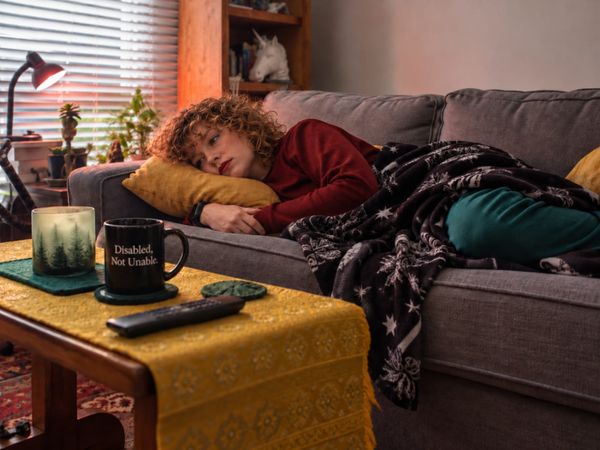
Disabled and unemployed. What's next?
Losing a job is destabilizing enough. Disability, chronic illness, benefits, and inaccessible systems can turn it into a full-time administrative crisis.


Update note: Originally published November 2024. This personal dispatch records where I was two months after a layoff. In October 2026, I updated its resource pathways while preserving the original account.
Since I last updated you all in September, I've been pretty busy. I sorted out health insurance and unemployment (kinda). I also moved back in with my husband and moved again to a larger apartment, two weeks later.
And finally, I tried to figure out my life. Still working on that.
Why is being unemployed so inaccessible?
I knew a lot of disabled workers were underemployed. After all, unemployment rates are still twice as high for disabled workers as abled ones.
But I never expected losing one's job would be such a frustrating and inaccessible process. First, you get a bunch of documents to sort through that may or may not be complete or answer all your questions.
Then, all the information you need is sent by mail, which takes time—and plenty of finger-crossing that you don't miss something important. After that, you have to set up and learn several online accounts, which still may not give you the right information, so you research to fill the gaps, call, or wait for yet another letter.
A call can take hours of waiting, especially if you use the "call back" feature. Mine took 6 freaking hours and I ended up missing the call, no text or warning when it was my turn.
It was a whole month of not knowing whether I'd receive unemployment or what to do about my health care coverage. Add in health conditions and two moves, and you've got yourself literal chaos.
Finally, in early October, I successfully got my first unemployment payment. Then it took another few weeks to sort out COBRA and get my health insurance up and running again.
Unfortunately, getting the studies I need to test for potential narcolepsy has once again been delayed. Will share updates as I have them!
Move and post-move recovery
My partner and I moved from a one-bed to a two-bedroom apartment in mid-October. It's been wonderful to have my own space!
But despite the move being relatively easy, it took what felt like several weeks to recover. I knew I'd need a few days off after the move, but it never occurred to me that I'd struggle to focus on anything important for more than a week.
It was a struggle not to give in to low moods again at this point because I just felt utterly useless and like I'd never get back to my version of normal. But that's the name of the game with depression and I'm truly grateful I could take the time I needed to rest.
Stability meets instability
One thing we really don't talk about much is how disorienting depression can be. My experience of depression is cyclical, so while my baseline is mild to moderate depression, I'll generally dip down to severe once a month or so. I'm constantly anxious, constantly reactive, and occasionally suicidal.
Then, there's a period of recovery where I slowly, slowly come out of it. Lots of rest followed bya somewhat overwhelming period of rediscovering hobbies, sex, friends, and the outdoors again.
After a few weeks of throwing myself into life again, I get exhausted, and the severe depression descends again. Rinse and repeat.
Lately, though, with the right lifestyle choices and medication, I've been less like I'm living on a constantly tilting planet. I can still see the cycle happening, but it's less obvious, and thankfully, less exhausting.
Moving didn't exactly help with that balance, but it feels like I'm reaching an equilibrium finally, which is nice.
What's next for me?
I'm finding a sense of stability with my health, and hopefully that will continue once I have a diagnosis and treatment plan. But there are still a lot of questions to answer in my life right now.
The one top-of-mind for me (and possibly you as well) is...what about work? Well, the short answer is that I plan to ramp up my freelancing and potentially get a part-time job to supplement my savings.
The long answer? I'm not able to do a lot right now. My health has improved drastically from the spring, but after a pretty stressful year of juggling multiple jobs and major mental and physical illnesses, I need a lot of downtime.
So I'm taking the time I have to plan my career path, focus on DEAI work, and prioritize my health. It's very much a "one day at a time" situation.
But I am absolutely loving being back to my more flexible routine, making walks at random times, and having afternoon adventures with my husband again.
The Chronic Worker blog update
Before I forget! Now that my blog has officially launched, I've decided to go back to the regular twice-monthly cadence I was doing before my health got in the way.
That goes for the LinkedIn newsletter version of these posts as well.
Another update: My goal with this blog/newsletter is to reach as many people as possible, so I won't have any more gated content. I'll be opening up all my posts to the public, including my recent health updates.
That's all for now! Cheers.
Where to go next
- Recently written: What to do when you lose your job
- To get notified when new posts come out, feel free to subscribe here. You can also sign up on LinkedIn!Learn more about me and my work
- Listen to the Bettermental Podcast on YouTube
- Looking for work? Browse 12 job boards and resources for disabled and chronically ill workers.
- New here? Start with the guide to The Chronic Worker.
Keep exploring
The question isn’t only where to find a job. It’s whether that job is workable once you’re hired. If you’re weighing energy, workload and recovery, the self-management guide may help you name what you need.