Field Recording: What month one of SIPS taught me
An audio companion to the first monthly field report from the Starr Institute of Physiological Shenanigans.

Month One of SIPS was supposed to answer a fairly simple question: What happens when I stop trying to reconstruct my chronic illness from memory and start observing it over time?
The answer, unsurprisingly, got complicated.
In this Field Recording, I read through the major findings from the first month of SIPS—but I also wander beyond the written report into how the experiment developed, why spreadsheets kept failing me, what voice memos capture that wearables can’t, and why reducing the burden of tracking may actually produce better evidence.
There is also a medication alarm, some institutional lore, at least one spreadsheet self-own, and an unnecessary number of side stories.
In this recording
I talk about:
- Why SIPS began in the first place;
- What Month One suggested about consistency versus intensity;
- Cumulative versus immediate recovery
- The growing distinction between physical and cognitive recovery;
- Why getting the best documentation on bad days is so crucial
- And much more!
As always, these are observations from a study of one person, not universal findings about chronic illness. SIPS exists to notice patterns, develop better questions, and create better context—not to diagnose or replace medical care.
Read the written report
Prefer text—or want the cleaner version with all ten Month One findings laid out in one place?
If not, here's the full transcript so you can follow along as I wander off on tangents:
Field Recording #2 Transcript
This is Leanna Lee, recording the Month One SIPS Field Recording: “What Month One of SIPS Taught Me.”
Welcome to the Starr Institute of Physiological Shenanigans, or SIPS for short. This imaginary 1930s travel-research institute has become the home of all of my health-data collection and analysis to help me better understand my body with chronic illness.
SIPS began with a simple frustration. I was struggling with insomnia, narcolepsy-like symptoms, and debilitating depression and PTSD. Medical care captures single moments, while chronic illness unfolds across weeks, months, and even years.
I spent nearly two years trying to get clarity around a possible narcolepsy diagnosis because at least one of my tests didn’t match the diagnostic criteria even though many of my symptoms did. One of my current working theories is that either my sleep medication affected the results or my chronic insomnia complicated them, but I’m still investigating. That kind of uncertainty is part of why I started SIPS in the first place.
Whatever happened, it left me annoyed at a healthcare system that often relies on expensive, one-time tests to make decisions about chronic illnesses that change every day. I didn’t want to replace expert medical care or diagnose myself. I just wanted better evidence to bring to my appointments.
If a sleep study could only show me what my body did on one particular night, I wanted to know what happened during the other 364. What did my sleep look like over weeks and months? What happened on a particularly bad day? Did the same patterns keep showing up? What was changing that I couldn’t remember by the time I got to a doctor’s office?
Because that’s another part of this: you’re asked to give a rundown of your symptoms. Dates. Times. Duration. What changed. What made it worse. What made it better. All sorts of things I may not have answers to unless I’m basically hooked up to machines 24/7.
Not only am I trying, as someone with chronic illness, to track what my body does each day without spending enormous amounts of time and energy doing it; I’m also expected to remember all of that later, when the information becomes useful.
So I decided to build my own longitudinal record alongside my medical records: something that could help me understand my body over time, ask better questions, and give my doctors more context than I could reconstruct from memory.
I knew that meant tracking and analyzing a lot of data over time. I’d tried manual methods before. The first system I remember building was a spreadsheet back around 2020 or 2021, when my insomnia was starting to tank and some of the bigger sleep symptoms were becoming more obvious. At that point I was tracking mental health and productivity—how my mental health affected my work productivity—which was actually a really cool experiment, and I do want to resurface it later.
The idea was good. The system itself was almost as wearing as the thing I was trying to track.
The next version I tried was in collaboration with my friend Jill, who you’ll hear from soon. She’s awesome. Then eventually I landed on the SIPS idea and thought: maybe I can get somebody else to do some of the work for me. In this case, “somebody else” turned out to be AI.
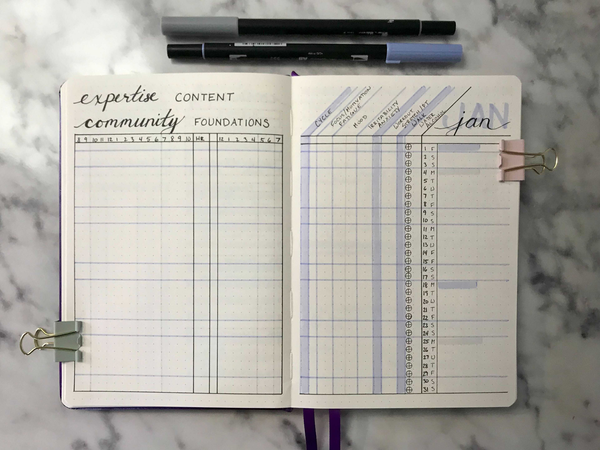
I’d tried spreadsheets and calendars, but they were too much to maintain—especially on bad health days, which are exactly the days when the data matters most. Nobody really wants to fill out a ton of spreadsheets.
I say that while thinking about the fact that my first public Field Kit also involves a spreadsheet, so: right track, still working on the right solution.
I did some research and realized two things. First, wearables could fill in some data gaps with very little effort. Second, ChatGPT—which I was already using for work—could help fill in even more.
From there, I built a basic method for combining my daily lived observations with wearable data from WHOOP. I’ve been wearing it consistently for months now, after an earlier period of experimenting with it and establishing a baseline. It gives me things like sleep, heart-rate, recovery, and other physiological data.
Then I combine that with my lived observations. For me, those are usually voice memos rather than spreadsheets, because spreadsheets are difficult for me to maintain. Which, as you can probably imagine, is also why I tend to ramble in Field Recordings: this is where a lot of my ideas come out.
Wearables plus AI-assisted structuring plus a small set of things I’m deliberately tracking—that became SIPS.
In SIPS lore, the Starr Institute of Physiological Shenanigans is a slightly ridiculous 1930s adventure-and-research society run by three sisters: Lila, Scarlett, and Teal. Scarlett and Teal are nicknames, by the way. I’m not sure whether we’ll ever learn their real names. I am apparently not privy to that information, despite the fact that I made them up.
Think women’s adventure club meets old-school geographical society, except the unexplored territory is chronic illness. Legend has it that the foundress of the Starr Society had ties to the Royal Geographical Society, though naturally the Institute’s records are suspiciously incomplete.
There are investigators, field reports, maps, evidence lockers, research expeditions, and a reasonable amount of institutional error for an organization that technically exists inside my laptop.
The lore makes the work fun, but the work is serious. The purpose of SIPS is to create meaningful insight into how chronic illness works over time, reduce the burden of living with it, and leave field notes for anyone who comes later.
I call this case “The Curious Case of the Highly Suspicious Human Physiology,” which I have now attempted to say correctly several times.
I didn’t start SIPS because I wanted another dashboard to keep up with.
[Medication alarm sounds.]
That was my alarm reminding me to take my meds, actually.
I started SIPS because I was tired of trying to explain my body from memory. With chronic illness and serious mental-health symptoms, being expected to sit down in a medical appointment and reconstruct everything that has happened to you can be overwhelming.
It reminds me of being young and sitting in doctors’ offices and hospital rooms with my mum, helping provide information when she was the patient. Even then, it was a lot. Now that I’m the patient, I keep thinking: how does anyone manage chronic illness without a full-time caregiver?
The goal of SIPS is not to optimize my body into some sort of productive machine nonsense. It is to understand how I can live and work more safely. And, over time, I hope the findings can help support the idea that chronic illness may be better understood through a more holistic, preventive, longitudinal approach.
Tired of reading yet? Here you go, just in case.
Findings from Month 1
Month One ran from July 6 through August 5. It was essentially a field study of one person: daily lived-experience reports, longitudinal WHOOP data, and recurring reviews for patterns across sleep, recovery, symptoms, workload, environment, and support.
These are not universal findings about chronic illness. They are things I’ve noticed about how my own body works—within the limitations of an N-of-1 observation—and hypotheses I’m continuing to test.
A month of observation showed me that my chronic illness isn’t just about symptoms. It’s about the interaction between physiology, environment, workload, support systems, and my body’s ability to recover over time.
Here are my ten biggest findings from Month One.
1. My body responds better to consistency than intensity.
This was one of the more obvious findings, but also one of the biggest. Rather than thriving on either complete rest or pushing through, my strongest physiological recoveries occurred after several days of moderate activity and careful pacing.
In my Month One data, sustainable routines consistently looked better than trying to capitalize on occasional good days.
Basically: if I try to recover really quickly, or do extra because it seems like a good day, that isn’t as useful as I think it will be. And if I think I can get away with doing a lot because I happen to feel good that day, I’m probably wrong.
2. Recovery is cumulative, not immediate.
Several consecutive days of lower strain and consistent sleep produced measurable improvements in recovery—things like HRV, resting heart rate, and sleep-related metrics.
Meanwhile, demanding work, travel, and social events often created a physiological and symptomatic hangover lasting 24 to 48 hours or more.
The cost of an activity is not necessarily contained within the activity itself.
3. Physical and cognitive recovery are not the same thing.
One of the clearest findings was that feeling physically recovered did not necessarily mean my brain had recovered. WHOOP could suggest that my body was ready for activity while I still had significant cognitive fatigue.
That means I need to track physical and cognitive recovery separately.
I found this particularly interesting because my sleep-disorder symptoms and my mental-health symptoms do not always seem to recover on the same timeline. Sometimes one improves before the other. Sometimes the reverse happens. That mismatch is something I want to keep watching.
4. Good sleep does not always prevent daytime sleepiness.
This one is somewhat obvious when you live with significant sleep-disorder symptoms, but it was still important to document.
Several sleepy episodes occurred after objectively good nights of sleep, with strong sleep efficiency and substantial REM and deep sleep. Poor sleep clearly makes things worse, but good sleep does not necessarily eliminate daytime sleepiness.
For me, insomnia and excessive daytime sleepiness appear to coexist chaotically—which can make it difficult to parse what is actually causing what.
5. WHOOP-estimated sleep need can recover faster than symptoms.
Long nights and daytime naps generally brought my estimated sleep need down within a day or two. But fatigue, sleepiness, and reduced functioning often persisted.
That suggests that correcting sleep quantity alone may not fully restore daytime function.
WHOOP uses concepts like sleep need and sleep debt, and I’m still learning exactly how useful those metrics are for me. But I did notice a recurring pattern: after long, mentally or physically exhausting days, I might sleep badly for a day or two, then eventually sleep very hard. After that, my sleep would often stabilize again.
That doesn’t tell me everything about recovery, but it does tell me something about how my body appears to bounce back.
6. The story contains evidence the numbers miss.
One of my biggest Month One discoveries wasn’t about symptoms. It was about how I was collecting them.
Manual tracking kept failing because the method demanded too much from me—especially on the days when good records mattered most.
And that’s the problem: the days when you need the clearest documentation are often the days when you are least able to provide it.
So I started talking instead.
I record voice memos, and ChatGPT helps turn those memos into structured reports. Those memos consistently capture context my wearable data and questionnaires can’t: environmental factors, emotional state, functional limitations, symptom progression, daily decision-making, and all the messy parts of a day that don’t fit neatly into a score.
Beginning with a story produced richer evidence than beginning with a checklist.
The cycle became: I tell the story. SIPS turns the observations into structured evidence. We look for emerging patterns. I use those patterns to decide what deserves closer observation. Then eventually, hopefully, we produce a better story.
I like that cycle.
7. Lower cognitive cost produces better research.
The easier I made reporting, the more complete my evidence became.
Reporting every two to three days proved much more sustainable for me than demanding perfect daily documentation, especially on bad days.
Month One established several methodological principles that I want to carry forward:
- Narrate first, score second
- Infer before you inquire
- Capture first, structure second
- Question only when necessary
The goal is to reduce reporting burden while increasing evidence quality.
This is something I want to explore more in future Field Kits, particularly around recovery and how to report when things go south for a day or more.
8. Chronic illness behaves like a system, not a collection of symptoms.
Recovery and daily function were influenced by much more than sleep.
Workload, travel, alcohol, heat, administrative burden, social context, and support all interacted with physiological recovery.
Looking at the system gave me a much better picture than looking at isolated symptoms.
That is part of the reason for this whole setup. Chronic illness affects every part of my life, so it makes sense to observe the context around the symptoms rather than pretending each symptom exists by itself.
9. Support is only helpful if it is accessible.
Friends rallied around me during difficult periods, but navigating benefits paperwork and disability systems remained extremely difficult because fatigue, executive dysfunction, and memory problems limited my ability to complete the very tasks required to get assistance.
Support isn’t enough merely to exist. It has to be usable when capacity is low.
That is something I want to keep tracking separately from whether support is technically available.
10. Longitudinal observation reveals what single days cannot.
Perhaps the most important finding from Month One is that meaningful patterns only became visible after several weeks of observation.
Wearable data, structured observations, and narrative context each captured different parts of the picture. Together, they created a much richer understanding of my health than any one source could provide alone.
What I'm watching next
My original Month Two priorities were:
- One: develop a two-axis model of insomnia and excessive daytime sleepiness.
- Two: expand environmental and support-system tracking to include things like financial stress, physical versus cognitive recovery, and emotional versus practical support.
- Three: test whether improvements in practical support reduce symptom burden and improve functional capacity independently of medical interventions.
That is a lot, and I may move some of the environmental and support-system work into Month Three because I want Month Two to focus more heavily on recovery.
I’m also planning to investigate some patterns I’ve noticed around blood sugar and how I feel across the day. I don’t yet know what those patterns mean, which is exactly why I want to observe them rather than jump to conclusions.
More on that in a later piece.
(The rest is just an ad for the Field Kit, so I figured I'd cut the long one and give you the shorter one here, instead!)
Want to try observing your own patterns?
Field Kit #1: The Chronic Life Observation Kit is a lower-burden starting point for people who want to notice what is happening in their own lives without turning themselves into a productivity project.
It’s built for imperfect days, incomplete memories, and people who need useful evidence without another exhausting system to maintain.
No perfect memory required. No optimization required. No heroic bullshit.
Keep exploring
Continue with Month 2: The Long Tail of Recovery to see which questions carried forward. For the bigger picture, Start Here maps the stories, research and tools.